 Petr Skoda
Agriculture has long been a sector where technology arrives slower than elsewhere. That is changing. Labor shortages, rising input costs, and increasingly unpredictable weather are pushing farms to run individual processes, from irrigation through crop protection to equipment maintenance, based on data rather than experience and guesswork alone.
What automation actually means in agriculture
The foundation is a network of sensors placed across the field or directly on machinery, measuring soil moisture and temperature, air temperature and humidity, wind speed and direction, or atmospheric pressure. Their data travels over low power wireless networks, typically LoRaWAN or NB-IoT, which let sensors run on a single battery for years without needing a recharge.
The data alone has no value on its own. Real automation begins only once software uses it to make a decision, or at least recommend a specific action to the farmer, such as when to irrigate, when to spray against pests, or when to send a machine in for service.
Automated irrigation
Soil moisture sensors can trigger irrigation exactly when a crop needs it, instead of on a fixed schedule. According to available industry data, this can cut water consumption by tens of a percent in practice, while also saving the time a farmer would otherwise spend manually checking field conditions. More stable moisture levels also tend to improve both crop quality and yield.
Artificial intelligence in the field
Alongside sensors, agriculture increasingly relies on models that recognize the content of photos and video from the field. They can tell a cultivated crop apart from weeds and remove the weeds selectively, without blanket herbicide application. Similar models can spot an emerging disease or pest from a photo of a leaf before the problem is visible to the naked eye, and estimate fruit ripeness to determine the optimal harvest timing. The underlying principle is the same one we describe in our article on how AI actually works: the model learned to recognize patterns from a large number of photos, and now applies that ability to new images from a specific field.
Guided and autonomous machinery
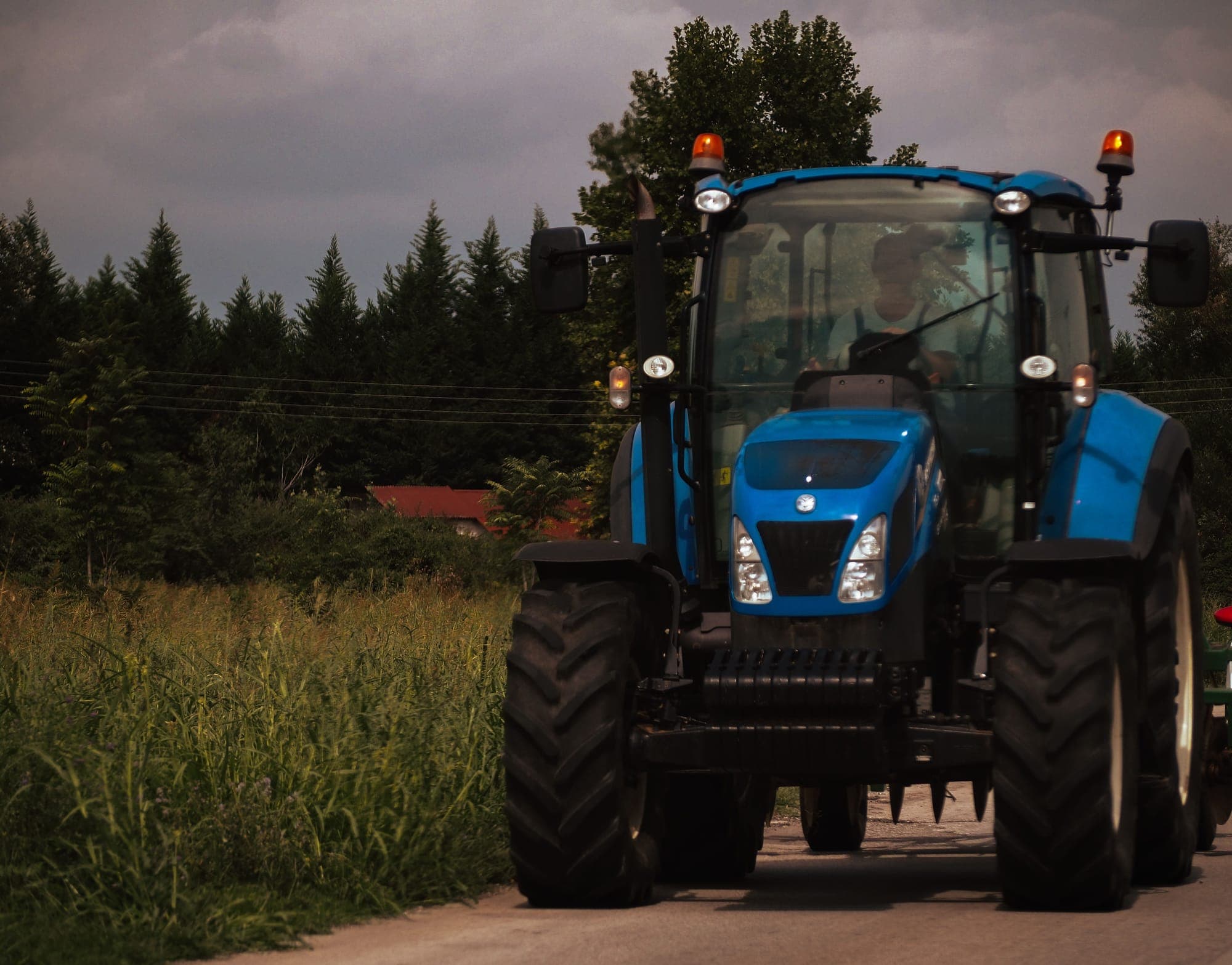
Tractors and other equipment now commonly use centimeter accurate GPS guidance, letting them drive the field without overlaps or gaps between passes. Building on that foundation, autonomous machines now handle selective harvesting, mechanical weeding, and targeted spraying with minimal operator oversight. For a larger fleet of machines, it also makes sense to track their technical condition, so a breakdown does not happen right in the middle of harvest, when time matters most.
Tracking livestock and equipment condition
A similar principle applies to livestock. Sensors on collars or ear tags track movement, rest time, and feed intake, and deviations from normal patterns can signal an emerging illness before a person would notice it. On machinery, vibration, temperature, or pressure sensors make it possible to schedule service based on actual wear rather than a fixed interval, avoiding unplanned downtime during the busiest part of the season.
Where automation hits its limits
Large, often remote plots of land tend to have uneven signal coverage, so data transmission reliability needs to be addressed at the design stage, not after sensors in a more distant part of the field stop reporting. A second common problem is fragmentation, where irrigation, machinery, and livestock tracking each run in a separate application from a different vendor, leaving the farmer without one unified view and forced to check several systems separately.
Where Eniware fits in
Eniware builds systems that combine data from different sensors and machines into one unified solution, similar to the digital twins we build for manufacturing and logistics, which we cover in a separate article. The same approach, connecting IoT sensors with AI evaluation in a single dashboard, can be applied to a farm operation too, whether that means irrigation, machinery, or livestock. Where internet coverage across the land is unreliable, it also makes sense to decide whether data evaluation should run in the cloud or right on site, which we cover in our article on choosing between cloud and on-premise.