 Petr Skoda
In the process of building a digital product or internal system, there are two key milestones that often get confused with each other, even though they mean different things and arrive in a specific order: Problem-Solution Fit and Product-Market Fit. Understanding the difference determines whether a company invests in development at the right moment, or a few months too early.
Problem-Solution Fit: do you have a reason to build a prototype?
Problem-Solution Fit is the state where it has been demonstrated that the identified problem actually exists, the target group perceives it as serious enough, and the proposed solution genuinely addresses it. Reaching it is a necessary condition for starting MVP development, but it does not mean the product is ready for full rollout. It only means there's a good enough reason to invest resources in building a working prototype.
It's mainly validated qualitatively: through in-depth customer interviews, observing current behaviour, and analysing how the problem is being solved today. Concrete signals that Problem-Solution Fit exists include customers actively searching for a solution, willingness to pay for imperfect existing alternatives, or visible frustration with the tools currently available.
Product-Market Fit: does the product satisfy a large enough market?
Product-Market Fit is a step further: it describes a state where the product satisfies the needs of a large enough market segment, and customers actively seek it out, use it, and recommend it. The best-known way to measure it is the Sean Ellis Test: the share of users who would be "very disappointed" if the product ceased to exist. A value above 40% is considered an indicator that the market genuinely needs the product.
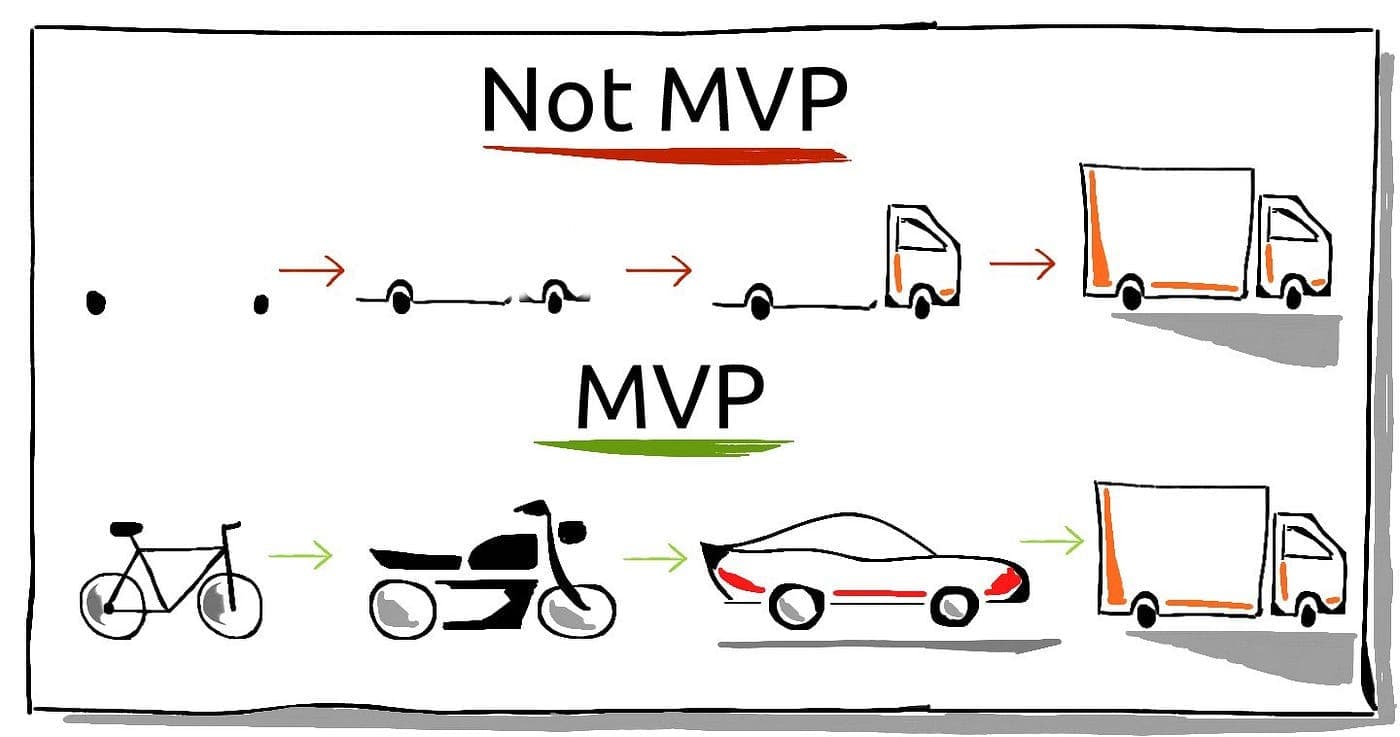
Skipping the Problem-Solution Fit stage and going straight for Product-Market Fit is one of the most common mistakes development teams make. Without a proven Problem-Solution Fit, trying to scale a product that customers don't actually need is equivalent to optimizing the distribution of something nobody wants to buy. The usual result is a faster failure, at a higher cost.
How to test the riskiest part of the assumption
A useful tool here is the Riskiest Assumption Test (RAT): identifying the one assumption whose failure would invalidate the entire solution, and testing that one first. For a clickable prototype, Guerilla Usability Testing works well: directly observing a small group of users using a think-aloud protocol. Jakob Nielsen's 1994 research showed that five well-chosen respondents can uncover roughly 85% of serious usability problems, so it doesn't take a large, expensive study to get reliable results.
In a case study focused on a tenant-screening application, a market survey of thirty respondents confirmed interest in the solution: 94% said they would actively use an independent tenant rating feature. The number alone guarantees nothing, but it shows how clearly a well-targeted survey can separate ideas that have a real chance from those better abandoned before any development money is spent.
What this means for your own decision
If you're still weighing up an internal system, an AI assistant, or an automation project, and you're not sure whether you actually have Problem-Solution Fit or are prematurely trying to scale something unproven, it's worth naming the riskiest assumption first and testing exactly that, ideally before the scope and budget of the project get locked in.
Sources
- Maurya, A. (2012). Running Lean: Iterate from Plan A to a Plan That Works (2nd ed.). O'Reilly Media.
- Andreessen, M. (2007). The Only Thing That Matters. Andreessen Horowitz. Retrieved from pmarchive.com.
- Ellis, S. (2009). The Startup Pyramid. Startup Marketing. Retrieved from startup-marketing.com.
- Blank, S. (2013). The Four Steps to the Epiphany: Successful Strategies for Products That Win (2nd ed.). K. & S. Ranch.
- Bland, D. J., & Osterwalder, A. (2019). Testing Business Ideas: A Field Guide for Rapid Experimentation. Wiley.
- Nielsen, J. (1994). Usability Engineering. Academic Press.
- Škoda, P. (2026). Validace zákaznického zájmu u digitálního produktu [Bachelor's thesis, source of the case-study figure of 94% cited above]. Prague University of Economics and Business.