Petr Skoda
When a company says today that it uses artificial intelligence, that usually means sending data to an outside cloud service and waiting for a response. A less known but increasingly accessible alternative runs the other way: hosting an AI model directly on your own server or device, without depending on someone else's infrastructure.
What it means to host your own AI model
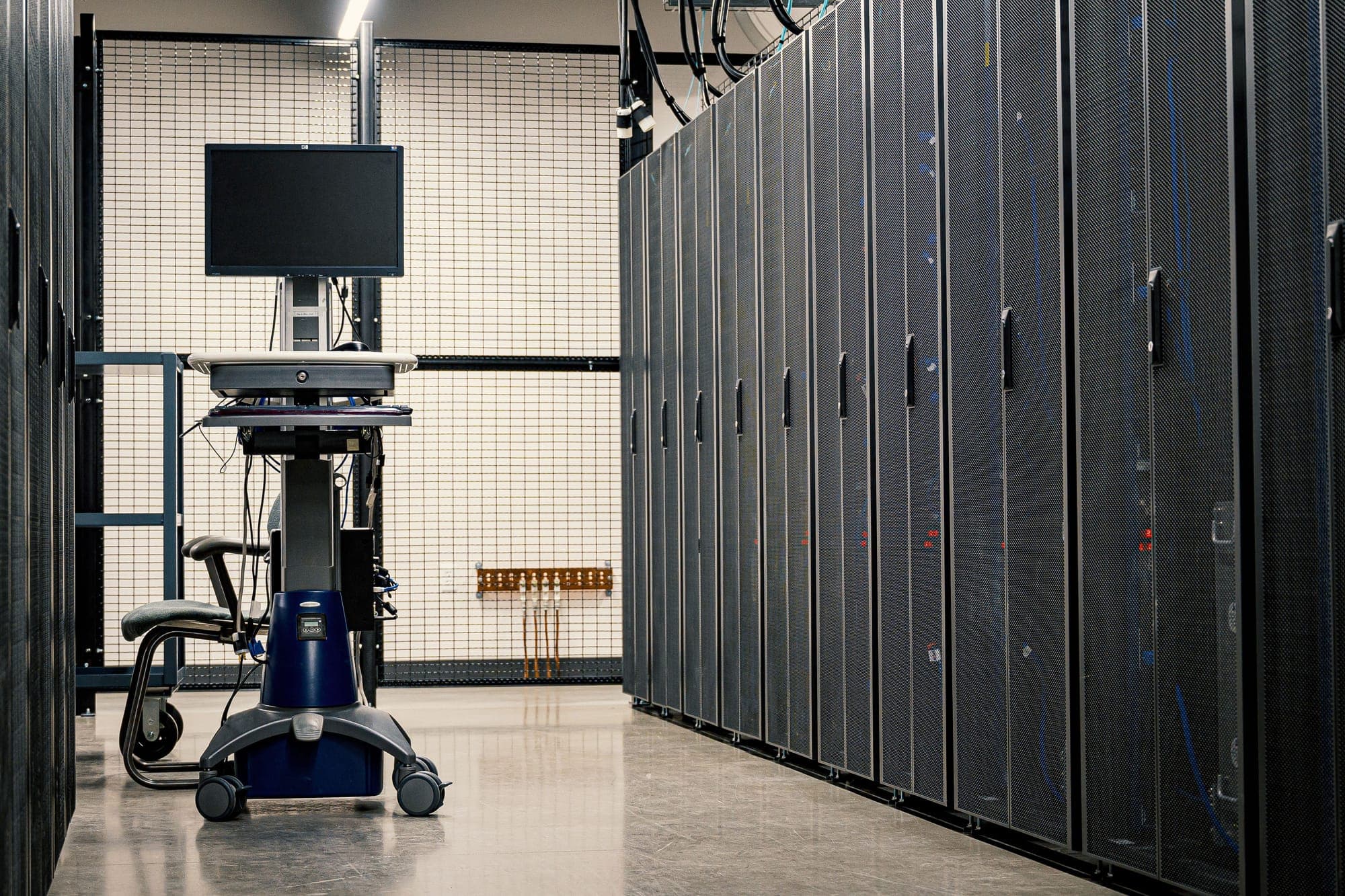
Many of today's AI models can be downloaded as so called open weights and run on hardware a company already owns, whether that is a company server, a local workstation, or a more capable device right on the factory floor. Instead of sending data out, the company runs the entire model itself.
The difference from using AI through a cloud service is significant. With a cloud service, a company sends its queries to someone else's servers and has no real control over exactly where the data gets processed or how long it might be retained there. With a self hosted setup, the model runs in an environment the company manages itself, and the data never leaves it.
Why companies consider this at all
The most common reason is data sensitivity. If a company works with internal documentation, customer personal data, or production data it does not want to send outside its own network, self hosting solves that problem in a fundamentally different way than any contractual guarantee from a cloud provider ever could.
The second reason is cost at high volume. Cloud AI services are typically billed per query, so costs scale up directly with usage when a company sends thousands of requests a day. A self hosted server, by contrast, has a fixed cost regardless of how often the company actually uses it.
The third reason is reliability and response speed where it genuinely matters. A model running locally does not depend on internet connection quality or on whether an outside service happens to be available. That matters most in manufacturing or logistics, where even a short outage has a real effect on operations.
Where this approach hits its limits
Self hosting has its own limitations too. The most capable models on the market often require hardware a smaller company simply cannot afford, and running a model yourself means taking on the maintenance, updates, and security work a cloud provider would otherwise handle.
In practice, most companies do not start by replacing all their AI use with a self hosted setup. They pick one specific task where data sensitivity, cost, or response speed matters most, and deploy a smaller model for that task on their own hardware. Everything else, where data sensitivity is less of a concern, can stay on a cloud service without issue.
Where Eniware fits in
Running an AI model directly on company hardware makes the most sense where the data being processed is sensitive production or operational data. That is exactly where Eniware work connects: custom IoT sensors paired with AI algorithms that can run right on site, not only in the cloud.
If your company is considering a self hosted AI setup instead of sending data to an outside service, it makes sense to start with one clearly defined task where data sensitivity or response speed genuinely matters, and test the approach there first.
This consideration is a specific case of the broader question we cover in our article on choosing between cloud and on-premise. And if your goal is not running your own model but rather getting AI to answer based on your internal documentation, that is handled by an approach called RAG, which we cover in a separate article.